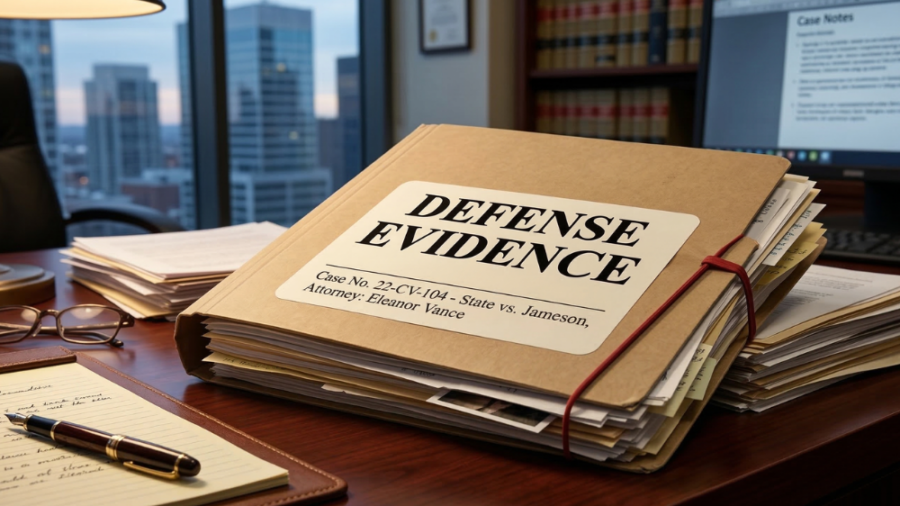
Child pornography defense attorney meeting with a client in an office, discussing legal options with law books, a gavel, and scales of justice on the desk.

Child Pornography Defense Attorney: How to Choose One?

Facing accusations related to child pornography is a terrifying experience that can change your life in an instant. The fear of harsh legal consequences, damage to your reputation, and the lasting stigma attached to these charges often creates overwhelming stress.

A collection of credit cards stacked on top of each other, highlighting the issue of credit card abuse.

What Is Credit Abuse: What Are the Different Types?

Facing accusations of credit card fraud—often called credit card abuse—can disrupt many aspects of your life. Depending on the circumstances, criminal charges such as access device fraud under Louisiana Revised Statutes § 14:70.4 (sometimes alongside statutes like R.S. 14:67.3 or R.S. 14:67.11) may lead to penalties such as fines, restitution, probation, or imprisonment, subject to judicial discretion and the facts of the case.

Men dressed in suits walk down the street, with a third man in handcuffs being escorted.

What Is the Difference Between Criminal and Civil Law?

If you’ve ever found yourself caught up in legal matters, the difference between criminal and civil law can be a labyrinth of confusion. Understanding the fundamental difference between criminal and civil law is crucial for any individual navigating the complexities of the legal system.

Two men sit at a table while discussing the legal aspects of kidnapping.

Kidnapping: What Are Its Legal Consequences?

Being accused of kidnapping in Louisiana is a dire and frightening situation. Kidnapping charges carry severe legal consequences that can impact your life and future significantly. It’s essential to understand what you’re facing and to get legal counsel immediately to protect your rights and build a strong defense.


Gavel, Handcuff, and a law book

Navigating the Storm: Your Guide to Preparing for Criminal Charges

Navigating the Storm: Your Guide to Preparing for Criminal Charges

By David E. Stanley, APLC

Facing criminal charges can be one of the most daunting experiences a person can endure. However, with the right guidance and preparation, it’s possible to navigate through this challenging time and emerge with the best possible outcome.

In this blog post, I will outline the essential steps to take when criminal charges have been filed against you, ensuring you’re equipped to face the legal storm ahead with confidence and resilience.

Secure Yourself: Find the Right Defense Attorney

  • Understand the importance of hiring a skilled and experienced criminal defense attorney.  Not all lawyers focus their practice on defending people charged with serious felony crimes. They also do not have the same level of knowledge, expertise, and trial experience.  While everyone has a budget, hiring the lawyer who charges the least is not the best strategy, especially if you are charged with a serious felony charge that carries substantial or mandatory terms of imprisonment, substantial fines, registration as a sex offender, or other life changing consequences.  
  • To find the best attorney for your case, find out if they focus their practice on felony criminal defense, research their background, and check their experience and track record.

Decipher the Allegations: Understand Your Charges

  • Have your lawyer break down the charges filed against you, and clearly explain the defenses available, all of the legal implications, and the potential consequences.
  • Have your lawyer clearly explain how the criminal justice system works and what to expect during court proceedings.

Gather Your Arsenal: Collect Evidence and Information

  • Make sure that you understand the importance of gathering all relevant documents, evidence, and information related to your case.
  • Discuss with your attorney what evidence may benefit your defense, such as witness statements, alibis, and corroborating documents.

Silence Is Golden: Exercise Your Right to Remain Silent

  • Know your constitutional right to remain silent and the importance of not speaking to law enforcement without your attorney present.
  • Understand strategies for protecting your rights and avoiding self-incrimination during police questioning.

Craft Your Strategy: Develop a Defense Plan

  • Work with your attorney to develop a customized defense strategy tailored to the specifics of your case.
  • Discuss potential defense tactics, such as pretrial motions to quash your charges, or suppress evidence, negotiating plea deals, or preparing for trial.
A Lawyer Court

Navigate the Legal Waters: Understand Court Proceedings

  • Gain an understanding of the various stages of the legal process, from arraignment to trial.
  • Understand the roles of key players in the criminal justice system, including judges, prosecutors, and defense attorneys.

Stay Informed and Empowered: Keep Up with Your Case

  • Stay informed about developments in your case and maintain open communication with your attorney.
  • Stay organized and proactive throughout the legal proceedings.

Count the Costs: Consider Potential Consequences

  • Discuss the potential consequences of different outcomes, including the impact on your personal and professional life.
  • Make informed decisions about how to proceed based on your circumstances and priorities.

Keep Your Secrets Safe: Understand Attorney-Client Privilege

  • Remember the importance of maintaining confidentiality and not discussing your case with anyone other than your attorney.
  • Understand the concept of attorney-client privilege and how it protects your communication with your lawyer.

Weather the Storm: Stay Positive and Resilient

  • Stay positive during the ups and downs of the case. 
  • Obtain resources for managing stress and maintaining mental well-being throughout the legal process.

Facing criminal charges can be overwhelming, but with the right guidance and preparation, you can navigate this difficult time with confidence and resilience. By following the steps outlined and working closely with a qualified defense attorney, you can position yourself for the best possible outcome and emerge from the storm stronger than ever. Remember, you’re not alone – Experienced criminal attorneys are there to help you every step of the way. If you are charged with a serious felony charge such as murder, manslaughter, distribution of narcotics, sex crimes, home invasion, carjacking, or any felony crime, I will fight to achieve the best possible outcome for you. Contact me now to schedule a consultation and start getting your life back to normal.

Call David E. Stanley, APLC now at (225) 926-0200  

David E. Stanley, APLC
1055 Laurel Street, Suite 2
Baton Rouge, LA 70802
225-926-0200


A man holding a statue of Lady Justice

What Do You Need to Know About Violent Crimes in Louisiana?

Violent Crimes Defense Attorney

Violent crimes are felony offenses with severe penalties upon conviction. You may lose everything important to you, your reputation least of all. You may jeopardize your freedom and career if found guilty of a severe crime in Louisiana. In Louisiana, prosecutors pursue severe punishments for violent crimes; depending on the specifics of your alleged conduct, you might potentially be sentenced to life in prison if the court “throws the book” at you. A conviction will come with heavy fines and a mark on your record that might prevent you from getting a job. You also could hold a professional license for a job involving public interaction, like teaching, law enforcement, or medicine. In that case, you will likely have your license revoked and could lose your job.

Even if you had no intention of causing the victim’s significant injuries or death, you could still face harsh penalties for violent acts. Our violent crimes defense attorney, David E. Stanley, APLC, can help you. We believe one is innocent of a crime until proven guilty and that if charged with a violent crime, one has the right to aggressive and skilled counsel from an experienced violent crime defense attorney. At David E. Stanley, APLC, we aim to plan a vigorous defensive approach on your behalf. If charged or under investigation for a violent crime, do not delay. Contact a Louisiana violent crimes defense attorney today!

Contact David E. Stanley, APLC

What You Need to Know About Violent Crimes in Louisiana

Yellow Barrier Tape Protecting the Crime Scene

What Constitutes Violent Crimes in Louisiana?

State statutes categorize violent crimes in each case. In general, using force against a victim is a part of violent crimes. Usually, using force involves threatening to use force or attempting to use force. When accused of committing a violent crime, it becomes more serious when they use force or a weapon against a particular group of individuals, such as emergency professionals, children, or the elderly.

What Is Considered a Violent Crime in Louisiana?

Louisiana considers the types of crimes below as violent crimes:

  • First-degree murder
  • Second-degree murder
  • First, second, or third-degree feticide
  • Aggravated assault and battery
  • Domestic violence
  • Homicide (including negligent or vehicular homicide)
  • Manslaughter
  • Rape
  • Aggravated arson
  • First-degree robbery, second-degree robbery, and armed robbery
  • Aggravated burglary
  • Hate crimes

What Could Be the Penalties in Louisiana If Someone Is Found Guilty of Violent Crimes?

In Louisiana, a conviction for violent crimes carries harsh punishments, including lengthy jail time and hefty fines. We detail the punishments for the aforementioned violent crimes below.

  • First-Degree Rape 

First-degree rape carries a life sentence without the prospect of release from prison. If a rapist targets a minor as a victim, the district attorney may seek the death penalty. Kennedy v. Louisiana, a 2008 decision by the U.S. Supreme Court, established that the death sentence is not a suitable response to child rape, mainly when the child survives, and the rapist never intended to murder the victim.

  • Second-Degree Rape

Second-degree rape carries a sentence of five to forty years at hard labor in a state prison.

  • Third-Degree Rape

Third-degree rape carries a maximum sentence of twenty-five years in prison with hard labor.

Domestic Abuse, Angry Asian Husband Clenching Fist Threatening Wife Indoors
  • Domestic Abuse Battery

Depending on whether this is the perpetrator’s first, second, third, or fourth crime, different punishments apply for domestic abuse battery. The first infraction carries a maximum fine of $1,000 and a six-month jail sentence. A $1,000 fine and up to a year in jail are the penalties for the second offense. A third violation carries a maximum penalty of $2,000 in fines and five years in prison. Lastly, a fourth offense carries a maximum fine of $5,000 and a term of 10 to 30 years in prison.

  • First-Degree Robbery

First-degree robbery carries a sentence of three to forty years in prison for hard labor without the possibility of release.

  • Second-Degree Robbery

Second-degree robbery also carries a three to forty-year prison sentence.

  • Armed Robbery

Armed robbery carries a prison sentence of 10 to 99 years at hard labor without the possibility of release.

  • Aggravated Burglary

Aggravated burglary carries a sentence of one to thirty years in prison with hard labor.

  • Aggravated Assault

Aggravated assault carries a $1,000 fine and a six-month jail sentence.

  • Aggravated Battery

Aggravated battery carries a maximum sentence of 10 years in prison, with or without hard labor, and a fine of $5,000.

  • Homicide

Depending on the type of homicide the perpetrator committed, different sanctions apply. For instance, manslaughter convictions carry far lighter sentences than murder convictions. According to Louisiana law, manslaughter carries a maximum sentence of 40 years in prison with hard labor. If the victim is younger than ten, the offender will serve the same time in prison without the possibility of release. Penalties are nonexistent for justified homicide because the majority of those found guilty of this crime do so in self-defense. Negligent homicide carries a maximum imprisonment of five years, with or without hard labor, and a fine of $5,000. Lastly, there is a maximum punishment of $15,000 and a sentence of 5 to 30 years in prison, either with or without hard labor, for vehicular homicide.

You can first defend against charges of violent crime with the assistance of an experienced Louisiana criminal defense attorney. Depending on your situation, it could result in an acquittal, reduced charges, a plea agreement, or dismissal. A knowledgeable criminal defense attorney can also assist you in handling the unintended implications of your conviction if you are found guilty.

A woman holding her fist

What are the Defenses in Louisiana for a Violent Crimes Charge?

The circumstances of a defendant’s case will determine the defenses that are accessible to them. Defendants of violent crimes in Louisiana frequently argue that there was a legal justification for their behavior rather than denying their conduct. 

  • Self-defense

One of the most well-known defenses against a violent criminal allegation is self-defense. A defendant uses this defense when someone dies or becomes injured in the process of defending themselves or another person. In some instances, the circumstances may justify the defendant’s use of force. However, the amount of force applied ought to be appropriate and reasonable. 

  • Lack of Intent

For most crimes, the prosecution must prove that the accused intended to commit the offense. A defendant might be able to refute an allegation of violent crime without evidence of criminal intent. For instance, a defendant may contend they were incapable of forming the intent required for criminal responsibility if they were under the influence of alcohol or mentally ill at the time of the conduct. 

  • Consent

The victim may have given their permission to commit a violent crime in certain situations, the court may determine. For instance, when a person gets hurt while voluntarily taking part in a boxing match. Consent is a complicated defense that depends heavily on the particulars of each case. 

A man using a magnifying glass to search counterfeit money
  • Lack of Evidence

There are situations where there is insufficient evidence to convict someone in a violent crime case. A Baton Rouge violent crime attorney may pursue less severe charges or file no charges if the prosecution does not have sufficient evidence to prosecute you for a violent offense.

  • Justification

Suppose there is strong proof that you used violence to defend persons or property during an emergency. In that case, a Baton Rouge violent crime attorney may be able to employ this argument on your behalf. This defense may cover violent theft crimes.

  • Solid Alibi

Our criminal defense attorneys can obtain proof if you were, in fact, not present when the violent crime took place.

  • It Was an Accident

Accidents do happen sometimes. A criminal defense lawyer may be able to use this defense to your advantage if you unintentionally cause harm to someone or kill them. For some homicide cases, this violent crime defense might be effective.

  • The Victim Is Not a Household Member

This defense is only available in situations involving domestic abuse. The State of Louisiana defines domestic abuse expressly as using force or violence against a home member. If the victim did not live with the family.

  • False Accusations

Sometimes, a culprit gets wrongfully accused of committing a violent crime, such as rape or domestic abuse. If this applies to you, a violent crime lawyer can get proof to demonstrate your sincere innocence.

Frequently Asked Questions 

What Is a Violent Crime?

A violent crime is an offense that involves the use of force against a victim, as well as when a victim is hurt, threatened, or suffers physical harm. Typically, the degree of bodily pain or injury inflicted upon the victim determines the level and severity of a violent crime.

How Many Violent Crimes Occur in the U.S. Every Year?

Unfortunately, violent crimes happen all the time in the U.S. According to FBI data, there were 1,203,808 violent crimes committed in 2019 alone. Aggravated assaults accounted for the bulk of these violent offenses (68%) committed. In the meantime, robbery offenses accounted for 22% of these crimes, rape for 8%, and murder for 1.4%.

How Many Violent Crimes Occur in Louisiana Every Year?

Louisiana consistently ranks among the most violent states in the union. For the thirty-second year in a row (since 1989), Louisiana has the highest per capita murder rate in the United States in 2020. In that year, there were 15.8 murders for every 100,000 inhabitants. Based on FBI data, the cities with the highest violent crime rates in 2018 were New Orleans, Baton Rouge, and Shreveport. With their use in about 45% of killings, handguns are the most frequently utilized murder weapon in Louisiana. Aside from homicide, rape, robbery, and aggravated assault rank among the most common violent crimes in the state.

Can You Expunge Violent Crimes From a Criminal Record in Louisiana?

No, you cannot expunge violent crimes from a criminal record in Louisiana. Certain felonies, but not violent offenses, can be expunged. David E. Stanley, APLC, a violent crime defense attorney in Baton Rouge, can examine the specifics of your case and assist you in determining whether you qualify for expungement.

Why Do You Need a Louisiana Violent Crimes Defense Attorney?

Being accused of a violent crime has the power to upend your life completely. These are the top three reasons to hire a violent crimes defense lawyer.

  • Plea Deals

Many accused of violent crimes could be tempted to accept the initial plea bargain, but that plea bargain might backfire if you represent yourself or your case with an unskilled attorney. You want a plea agreement that works in your favor. Plea bargains are only sometimes the most excellent option, as it is. Thus, you require a lawyer capable of negotiating and pursuing your best interests.

  • Sincere Counsel 

Crimes involving violence constitute grave allegations. Your life might be significantly affected by a conviction. Your career, connections with others, reputation, and potentially even your freedom are at stake. Instead of making snap decisions, you need someone who will be honest with you and guide you toward wise choices.

  • Full Picture

If you accept a plea bargain without legal counsel, the prosecution will not give you the full rundown of what might or might not occur. Furthermore, it would help if you learned to inquire about the nature and quantity of the evidence the prosecution has against you because they will not tell you. A lawyer gathers the data and presents you with the complete picture, outlining all the details. You would want to understand each decision and how it might affect your life.

Baton Rouge Violent Crimes Defense Lawyer

Criminal Defense Attorney in Louisiana

If accused of a violent crime, you know how stressful it can feel. In Louisiana, a person accused of any violent crime faces harsh punishments that include heavy fines, life in jail without the prospect of release, a permanent criminal record, and other disastrous outcomes. It is typical to feel overburdened.

Having a knowledgeable Louisiana violent crime defense lawyer on your side is crucial to assist you in navigating the legal system when facing violent crime charges. David E. Stanley, APLC, is dedicated to providing aggressive defense and all-encompassing legal advice to anyone accused of violent crimes. Our skilled violent crime defense lawyer will defend and protect your legal rights and ensure fair treatment. Contact us today to discuss your charges during a free, in-person consultation.

Arrested for a Violent Crime?
Call David E. Stanley, APLC, at 225-926-0200

David E. Stanley, APLC
1055 Laurel Street, Suite 2
Baton Rouge, LA 70802
225-926-0200

Prostitution Attorney Baton Rouge, LA

What Does the Law Say About Prostitution in Baton Rouge, Louisiana? Here’s What You Should Know

What Does the Law Say About Prostitution in Baton Rouge, Louisiana? Here's What You Should Know

Facing Prostitution Charges in Baton Rouge? Protect Your Rights Today!

Being charged with prostitution or solicitation in Louisiana carries serious consequences, including potential jail time, heavy fines, and a criminal record that could affect your future. You need an experienced criminal defense attorney to fight for your rights and work toward the best possible outcome.

💡 Get Immediate Legal Help – Call (225) 926-0200 Now!

🔹 Over 40 Years of Criminal Defense Experience
🔹 Proven Track Record of Success in Prostitution Defense
🔹 Aggressive, Strategic Defense to Protect Your Future

Prostitution Attorney Baton Rouge, LA

Prostitution Attorney Baton Rouge, LA

Baton Rouge is located in the center of Louisiana, where history, culture, and legal dynamics collide. A complex system of laws govern life in its bustling streets and quiet bayous. Prostitution laws are a complex component of street life in Baton Rouge. In this detailed guide, we delve into the subtleties of prostitution laws, shedding light on the definitions, and consequences, and the role of a legal professional and a top Baton Rouge prostitution attorney.

David E. Stanley, APLC, is an accomplished, highly skilled, and knowledgeable criminal defense attorney who possesses extensive knowledge in matters relating to prostitution laws. If you are facing charges related to prostitution, his experience can be an invaluable asset for you in dealing with this problem.  With unwavering determination, he will champion your rights, safeguard your best interests, and tirelessly pursue the most optimal resolution for your case. This commitment allows you to shed the burden of your criminal charges and move forward with your life.

A proven track record of successful representation in felony criminal cases across federal and state courts throughout Louisiana speaks to David E. Stanley’s trial skill and competence. Located in Baton Rouge, Louisiana, the offices of David E. Stanley, APLC, is prepared to assist you. Don’t hesitate to contact him for solutions to your prostitution charges. Now is the time to start building your defense. He remains steadfast in his mission to defend your rights.

Definitions and Context for Prostitution Laws

Prostitution, or the trade of sexual services for money, is a centuries-old tradition. In Baton Rouge, LA, as in many other places, the practice is governed by several laws designed to maintain public order and prevent exploitation. Prostitution laws cover not just the act of offering or engaging in sexual services for payment but also the solicitation, purchase, and patronization of such services with the harshest penalties directed toward conduct involving minors. 

In some counties in the United States, prostitution is legal. But, even in those counties, it is highly regulated and subject to strict laws governing what is allowable prostitution. These restrictions limit prostitution to licensed businesses and prohibit it in counties with populations greater than 700,000.

Prostitution from a Legal Perspective

Prostitution is illegal in Baton Rouge, LA. Sexual acts in exchange for money are generally deemed criminal under state law. Individuals who provide or perform sexual services and those who seek or acquire such services may face prosecution. The complexities of these laws stem from the differing settings and circumstances in which  prostitution is practiced and the attempt to prevent public unrest, human trafficking, and exploitation of women and minors. 

If the performer and the audience are of legal age, online streaming and exotic dance are examples of activities society considers sex work. When explicit physical and sexual actions are performed in exchange for monetary remuneration or any other form of compensation, the line between legal sex employment and illegal prostitution becomes clear. These laws also prohibit soliciting sexual services for financial gain and purchasing such services.

Individuals who arranged such services or gained financial benefits from them are subject to legal penalties if they violate these laws. These actions are known legally as “pandering” or “pimping.” Pimping is defined as receiving earnings from prostitution, directly or indirectly, and includes solicitation. Conversely, “pandering” refers to acquiring individuals for prostitution, which provides for coercing or compelling someone to engage in prostitution. Other unlawful behaviors related to prostitution include:

  • Prostitution Enterprise Management Or Ownership:

They engage in actions involving the administration or ownership of a prostitution-oriented establishment.

  • Individuals Transported For Prostitution Purposes:

You are transporting a person to a specific location to enable prostitution.

  • Maintaining or Facilitating Premises for Prostitution:

It allows one’s property to be used for prostitution-related activities.

  • Brothel Ownership Or Leasing:

Ownership, leasing, or operating properties expressly for the purpose of engaging in prostitution.

Prostitution Penalties and Repercussions

Individuals caught violating Baton Rouge, LA’s prostitution laws may face severe punishment. Fines, obligatory participation in education programs, probation, and even imprisonment may be imposed as penalties. Prior convictions, the involvement of minors, and the use of force or coercion can all affect the severity of these punishments.

The penalties for prostitution in Louisiana vary depending on criteria such as an individual’s prior convictions (i.e. is this a first, second, third, or subsequent offense) and the exact circumstances surrounding the incident.  Pursuant to La. R.S. 14:82, any offense committed more than five years prior to the commission of the current offense with which the defendant is charged shall not be considered in the assessment of penalties for prostitution. This means that any past convictions more than five years before the current offense will not be considered for enhancement and deciding the appropriate punishment.

The following are the consequences for various sorts of prostitution offenses under Louisiana’s particular legal framework:

Prostitution Attorney Baton Rouge, LA
 

First Conviction:

For a first conviction, the offender could be fined up to $500, imprisoned for up to six months, or both.

Second Conviction:

The legal repercussions of a second conviction grow more severe. A monetary penalty of not less than $250 or more than $2000 may be imposed on the offender. In addition, a sentence of imprisonment, with or without hard labor, of up to two years may be imposed.

Convictions On The Third And Subsequent Occasions:

A third or subsequent convictions increase the harshness of the punishments even more. A third or subsequent conviction may result in imprisonment for up to four years, with or without hard labor, and a fine of $500 to $4000 may be assessed.

Minors Involved In Prostitution:

Louisiana’s judicial system is incredibly stringent in matters involving kids.  An individual who engages in prostitution with a person under the age of eighteen is facing severe consequences. A conviction will result in a fine of up to $50,000, imprisonment at hard labor for not less than fifteen years nor more than fifty years, or both.

Prostitution Involving Minors Under 14 Years Old:

For anyone who engages in prostitution with a minor under 14 years of age, the legal implications grow significantly harsher. Offenders convicted under those circumstances could be ordered to pay a fine of up to $75,000, be imprisoned at hard labor for not less than twenty-five years nor more than fifty years, or both. 

The severity of these punishments demonstrate Louisiana’s commitment to combating prostitution with a spectrum of penalties commensurate with the seriousness of conduct involving young children and its societal consequences. The state’s legal system seeks to balance deterrent and rehabilitation while prioritizing the safety and well-being of its residents, particularly its most vulnerable citizens.

A Path To Rehabilitation Through Alternatives

A prostitution attorney in Baton Rouge, LA, may look into alternatives to traditional legal sanctions. Options may include diversion programs, counseling, and community service for less serious offenses. Individuals who embrace these choices may be able to prevent any lasting effects of having a criminal record and as they proceed on a journey of rehabilitation.

Frequently Asked Questions 

What are the Legal Ramifications of Prostitution in Louisiana?

In Louisiana, the punishments for prostitution convictions vary depending on circumstances such as prior convictions and the age of the individuals involved. A first conviction is a misdemeanor that can result in a $500 fine, six months in prison, or a combination of both. A second conviction is a felony that can result in a fine ranging from $250 to $2000 and a prison sentence of up to two years, with or without hard labor. Third and subsequent convictions may result in a maximum of four years in prison and a fine ranging from $500 to $4000. Prostitution involving minors exposes the offender to much harsher felony penalties, with fines of up to $75,000 and maximum imprisonment of 15 to 50 years, depending on the child’s age.


What is the Five-Year Cleaning Period in Louisiana for Prostitution Convictions?

Prostitution convictions in Louisiana are subject to a five-year look back or cleansing period. This means that convictions that occurred more than five years before the current offense will not be considered when deciding the appropriate punishment. This clause is intended to prevent prior convictions from excessively influencing sentences for future crimes, allowing people to start fresh once five years have elapsed after the prior conviction.

Are There Special Regulations in Louisiana Controlling Legal Brothels or Regulated Prostitution?

While Louisiana has severe anti-prostitution laws, it lacks the legal structure for regulated brothels like some Nevada counties. A few counties in Nevada have licensed and controlled brothels subject to strict standards. Louisiana’s legal approach, on the other hand, focuses on penalizing prostitution rather than creating a controlled environment for it. In Louisiana, the legal emphasis focuses on prosecuting people participating in prostitution activities and implementing state-mandated punishments.

Trusted Prostitution Defense Attorney Baton Rouge, LA

Prostitution Attorney Baton Rouge, LA

The legal environment is constantly changing, so it’s critical to stay current on any changes or revisions to prostitution laws in Baton Rouge, LA. Consulting with a trusted prostitution defense attorney in Baton Rouge, LA, ensures that you are protected by a skilled lawyer who is well-versed in the current legal environment, allowing you to make informed judgments should you require legal assistance.

Prostitution laws in Baton Rouge, LA, demonstrate the delicate dance between legal prohibitions and cultural factors. While rules are in place to maintain order and protect vulnerable individuals, the function of a prostitution attorney in Baton Rouge, LA, is critical in giving them a voice and a defense in the face of legal problems. As the city grows and evolves, so do its laws, determining the future of prostitution law and the people they affect.

David E. Stanley, APLC, is a seasoned attorney based in Baton Rouge who concentrates on defending prostitution allegations. With a lot of experience dealing with problems similar to yours, his goal is to assist you in regaining control of your life. David E. Stanley has an established reputation in Louisiana for his tenacious legal representation, which has repeatedly resulted in good outcomes in court. Don’t hesitate to contact him for a free appointment to discuss your prostitution defense case.

Need a Criminal Defense Attorney in Baton Rouge, LA?

David E. Stanley, APLC – Criminal Defense Attorney, Baton Rouge
1055 Laurel St #2, Baton Rouge, LA 70802
225-926-0200